
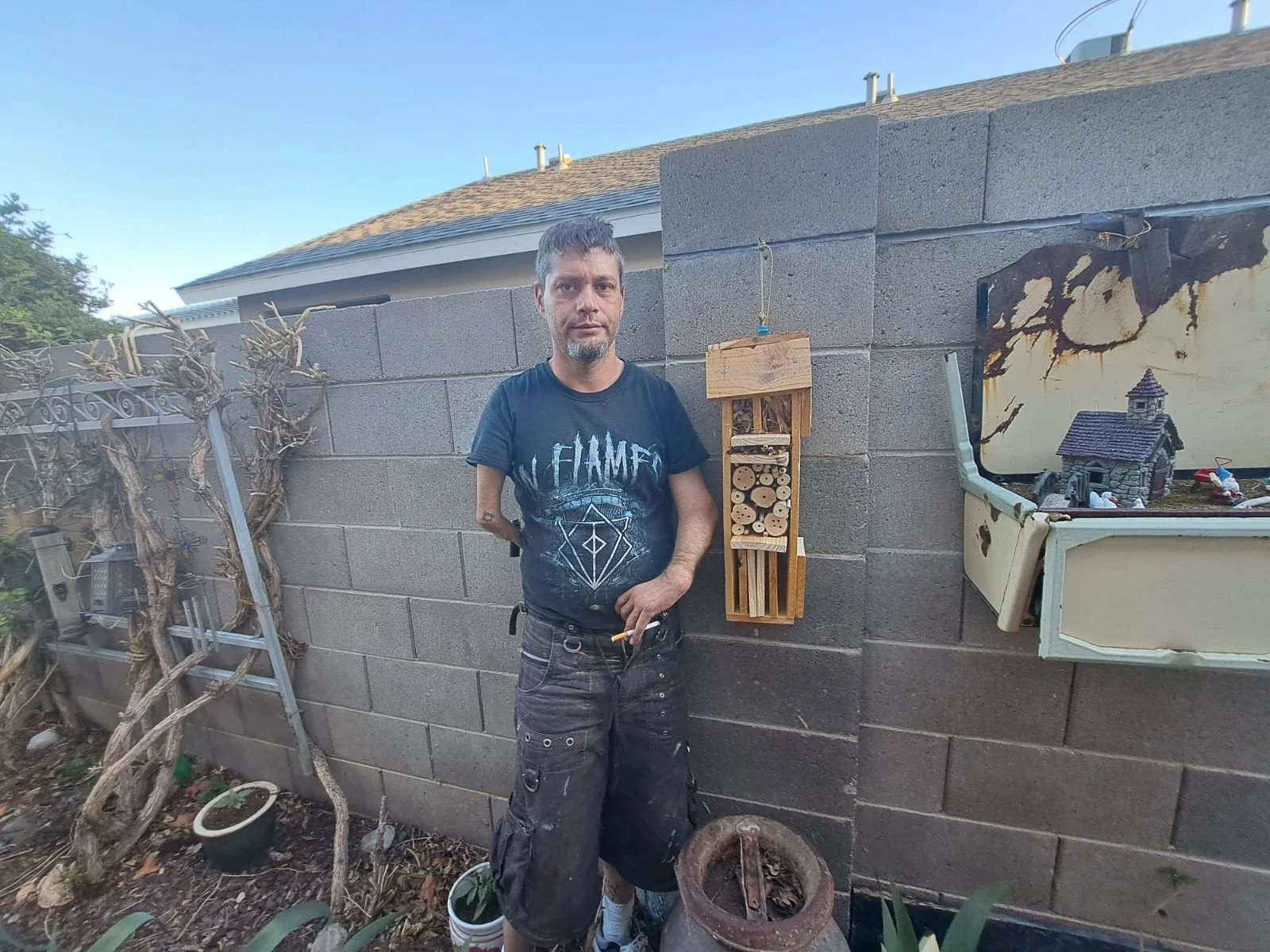
My story with the bees:
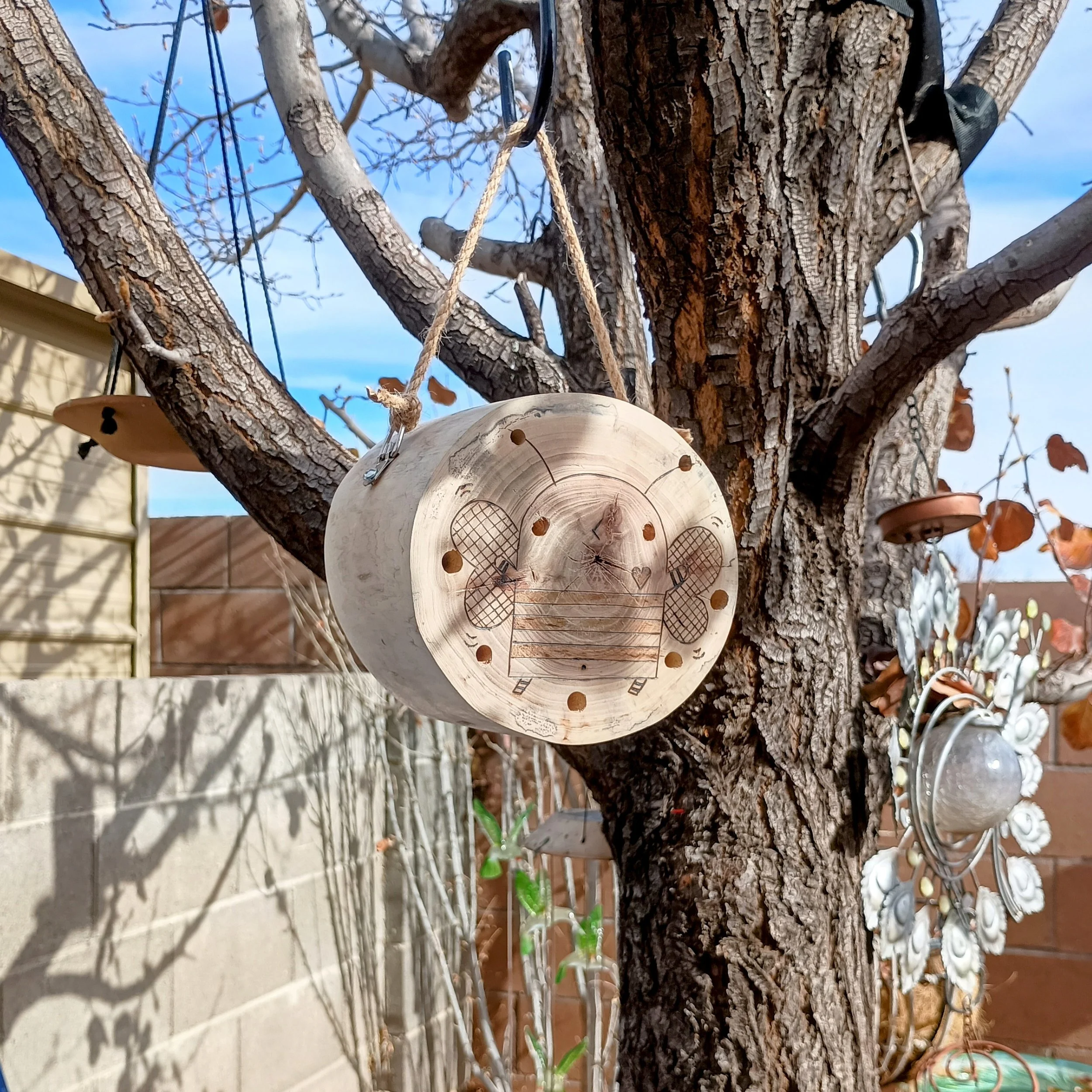
I got into the bees because I heard that bee populations are declining. I was apprehensive about growing honeybees as they might sting and require a lot of attention. But then I heard about solitary bees and their low-maintenance and high pollination. I started making my own solitary bee homes after discovering how easy they were to make, and how much I enjoy woodwork. After seeing bees actually live in my bee homes, I have continued to make more. After making and hanging 14 around my home, I want others to enjoy the bees as much as I have. Every bee home I make is just wood, rope, and hangers- no chemicals, and uses three different sizes for different bee varieties.
What are solitary bees?
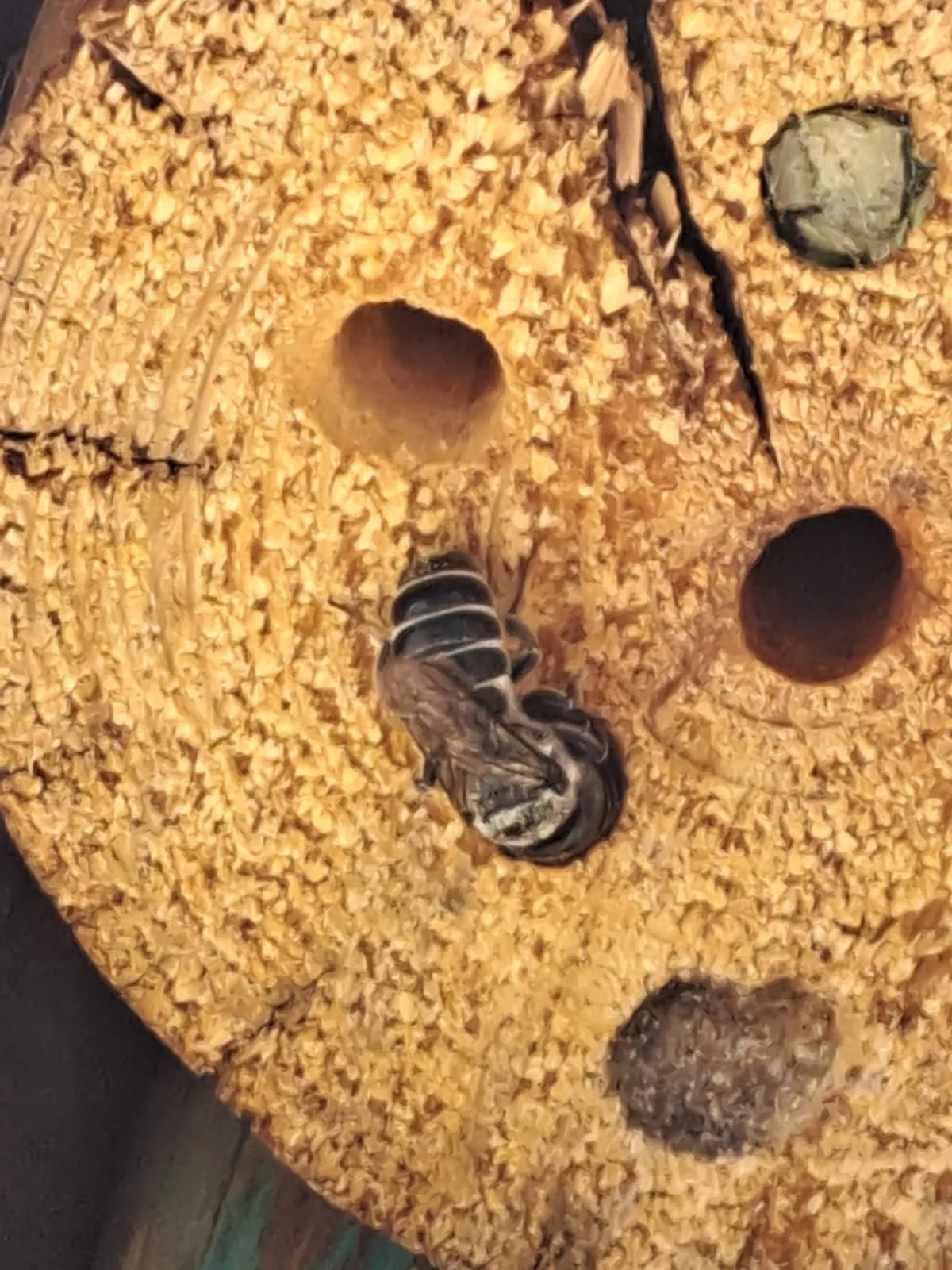
Solitary bees live alone, as opposed to colonies of honeybees or bumblebees. Solitary bees such as Leaf cutters, Masons, and Carpenter Bees are not territorial, or aggressive. That means they don't sting and you can get up close to them with mutual curiosity. They nest in the ground or above in wood, and use mud, leaves, body secretions or floral oils as their nesting material.
Their lifespan is very short, about 4-6 weeks. Starting in Spring as the weather warms up, females mate and build a nest in a hole or tunnel and seal off individual cells of eggs and food inside. They can lay up to 6 in each hole, before sealing them off and repeating this cycle the rest of their life. Their spawn repeat this process until fall and hibernation until the next spring.
Where to Hang:
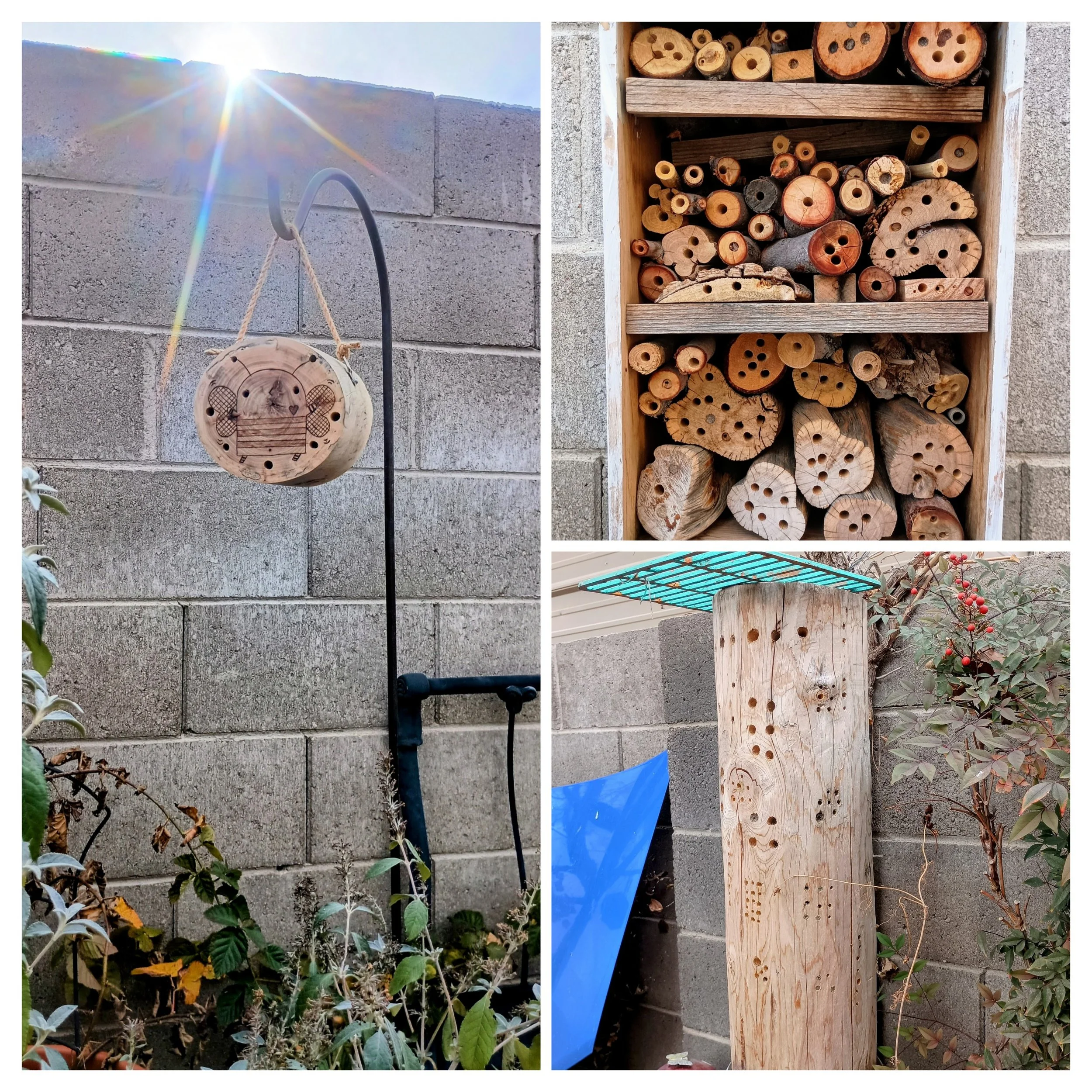
Bees need protection from wind and rain; these bee homes need to be hung under a tree, awning, or other protective surface.
Bees prefer morning sun, so hang the in the South or Southeast direction.
Bees like proximity to food, consider food sources like native pollinators.
Bees like to be 3-7 feet off the ground (away from natural predators like birds and ants).
What You Can Do:
Grow native pollinators for the bees, like Lavender, Cone flowers, Yarrow, and Bee Balm. Variety is the spice of life!
Provide bee baths year round for thirsty bees of all kinds. Just put some flat stones in a shallow dish with fresh water outside near plants, and watch bees from a new perspective!
Make your own bee homes – Look on YouTube and you will find many easy fun and sustainable ways for crafting your own bee homes!
How to Maintain your Bee Home:
If your bee home is a success and bees fill up –Congrats! - wait until all holes open and the new bees leave. If they keep reproducing their offspring and filling the holes, there is nothing to do. But within a year or two of leaving the bee home in the same location predators and parasites might come around and turn the bee hotel into a motel. If you see wasps or mites laying their eggs in bee holes – be mindful they might hatch their own offspring. To protect the bee larvae, Move the bee home to a new location. If it is overtaken, it is suggested to spray rubbing alcohol as well to kill parasites and wasp eggs. Clean holes with a pipe cleaner and try in a new location every year.
To purchase one of my bee homes, click here to order one today!
Links:
New Mexico Beekeepers Association
www.beekeepers.org
Think Like A Bee – Nonprofit of pollinator advocacy.
Https://thinklikeabee.org
Native Plant Society of New Mexico – Information on native plants, bee seminars, etc.
https://www.npsnm.org